




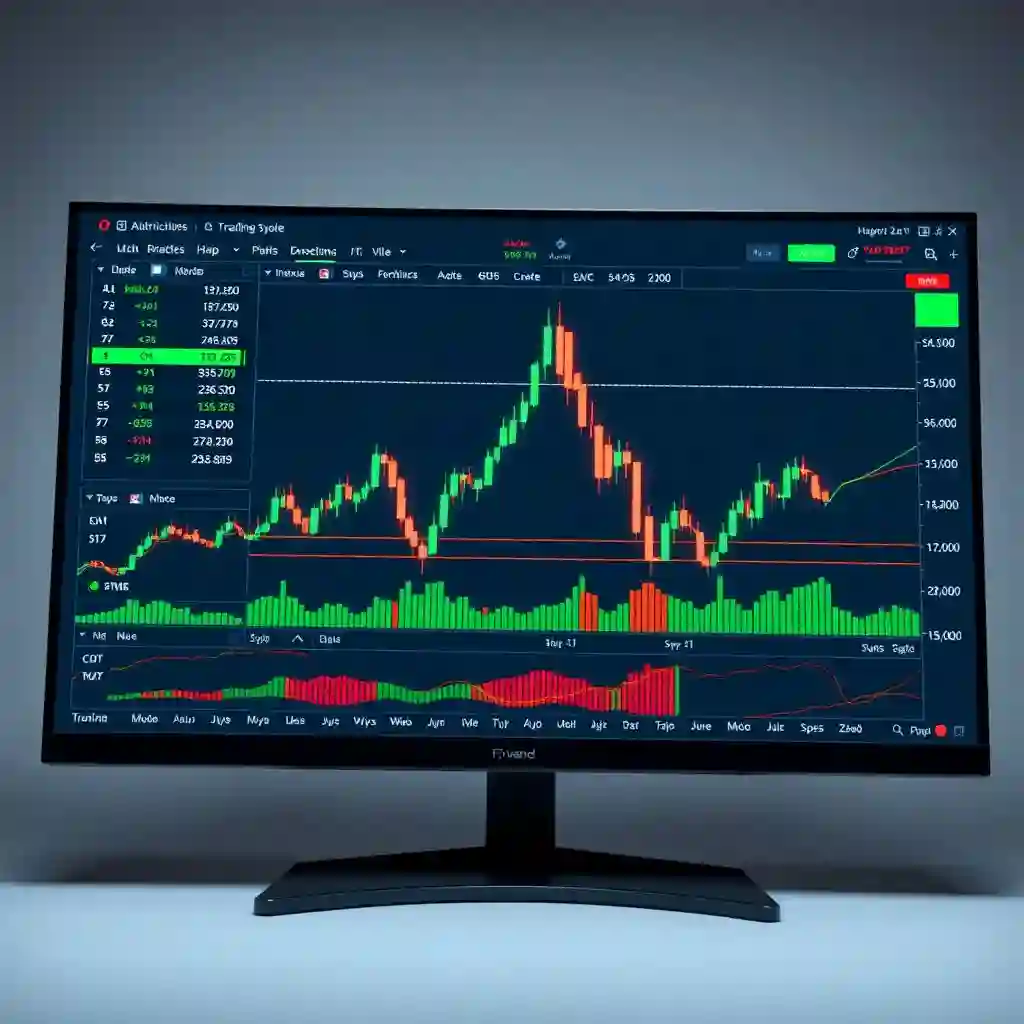
The world of trading is rife with opportunities for those willing to invest time in understanding its intricacies. Among the essential tools that every trader should master are technical indicators, which serve as vital signposts on the path to profitable decisions. This comprehensive guide will explore Best Technical Indicators Every Trader Should Know, each of them offering unique insights into market trends and potential entry or exit points for your trades.
Table of Contents
- Introduction to Technical Analysis
- Best Technical Indicators Every Trader Should Know: Moving Averages and Relative Strength Index (RSI)
- MACD: The Moving Average Convergence Divergence Indicator
- Bollinger Bands: Capturing Market Volatility
- Fibonacci Retracements: Unlocking the Secrets of Price Levels
- Stochastic Oscillator: Timing Entry and Exit Points
- On-Balance Volume (OBV): Measuring Market Sentiment
- Conclusion on Best Technical Indicators Every Trader Should Know
Introduction to Technical Analysis
Technical analysis is a method of evaluating securities by analyzing statistical trends, such as past prices and volume. It aims to predict future price movements based on market activity. Central to this approach are the Best Technical Indicators Every Trader Should Know, which provide traders with an array of tools designed to dissect market data.
The cornerstone principles of technical analysis include trends, support and resistance levels, volume analysis, and pattern recognition. By mastering these concepts alongside key indicators like Moving Averages and Relative Strength Index (RSI), you can gain a deeper understanding of market dynamics and improve your trading strategies.
Best Technical Indicators Every Trader Should Know: Moving Averages and Relative Strength Index (RSI)
Moving averages are perhaps the most basic yet fundamental tools in technical analysis. They represent a smooth line plotted through data points, providing traders with clear visual signals of trends and reversals.
- Simple Moving Average (SMA): This indicator calculates an average of closing prices over a specified period. For instance, a 50-day SMA would calculate the average closing price for the past 50 days. Traders often use SMAs to identify trend direction and potential support or resistance levels.
- Exponential Moving Average (EMA): An EMA places more weight on recent data points, making it a responsive tool compared to its SMA counterpart. It is commonly used in conjunction with the 50-day and 200-day EMAs to gauge broader market trends.
The Relative Strength Index (RSI) is another indispensable indicator that measures the speed and change of price movements. Ranging between 0 and 100, it helps identify overbought or oversold conditions in a security. A reading above 70 suggests an asset might be overvalued and due for a correction, while below 30 indicates undervaluation.
Developing Trading Strategies with Moving Averages
One popular strategy is the crossover method, where traders look for signals when faster-moving averages cross slower ones. For example, if a short-term EMA crosses above a long-term SMA, it could indicate bullish momentum.
MACD: The Moving Average Convergence Divergence Indicator
The MACD is a versatile tool that combines moving averages and oscillators to provide insights into price trends and potential reversals. Comprised of three components—signal line, histogram, and the MACD itself—it offers multiple layers for analysis.
Trading with MACD
A common strategy involves identifying crossovers between the MACD line and signal line to detect shifts in market momentum. Additionally, divergences between price action and MACD can hint at impending trend changes or continuation patterns.
Bollinger Bands: Capturing Market Volatility
Bollinger Bands consist of a moving average combined with two standard deviation lines above and below it. These bands not only capture trends but also measure volatility, contracting during consolidation phases and expanding during periods of high volatility.
Using Bollinger Bands Effectively
Traders often use the squeeze—a term describing when the bands converge—to anticipate potential breakouts. Conversely, a sudden expansion can signal significant market moves ahead.
Fibonacci Retracements: Unlocking the Secrets of Price Levels
Fibonacci retracements are based on ratios discovered by mathematician Leonardo Fibonacci and have become integral in identifying key support and resistance levels. Commonly used ratios include 38.2%, 50%, and 61.8%.
Trading with Fibonacci
When prices reach these retracement levels, they often reverse direction due to the strong psychological impact of round numbers on traders. As such, setting stop-loss orders near major Fibonacci levels can be a prudent risk management strategy.
Stochastic Oscillator: Timing Entry and Exit Points
The stochastic oscillator is an indicator that measures momentum by comparing a security’s closing price relative to its range over a given period. It typically oscillates between 0 and 100, helping traders spot potential reversal points.
Applying Stochastic Oscillator Strategies
When the stochastic oscillator enters an overbought or oversold region, it can signal a temporary loss of momentum. However, divergences between price and indicator levels often precede significant price movements.
On-Balance Volume (OBV): Measuring Market Sentiment
OBV is a cumulative indicator that reflects changes in volume as prices move up or down, indicating whether buying pressure exceeds selling pressure. This can help predict trend reversals before they become apparent through price action alone.
Interpreting OBV
When OBV rises while prices decline, it suggests underlying strength and may foreshadow a bullish reversal. Conversely, falling OBV amid rising prices hints at weakening buying interest.
Conclusion on Best Technical Indicators Every Trader Should Know
The road to becoming a successful trader is paved with continuous learning and adaptation of tools like the ones discussed here. By integrating moving averages, RSI, MACD, Bollinger Bands, Fibonacci retracements, stochastic oscillators, and OBV into your trading arsenal, you can gain a competitive edge in the market.
Remember, while these indicators provide valuable insights, they should always be used in conjunction with thorough research and sound judgment. As markets evolve, so too must our approach to analyzing them.
To enhance your technical analysis skills further, consider visiting Deposit Forex for additional resources and tools tailored to the needs of traders. For a deeper dive into financial concepts, visit Investopedia’s guide on technical analysis.