




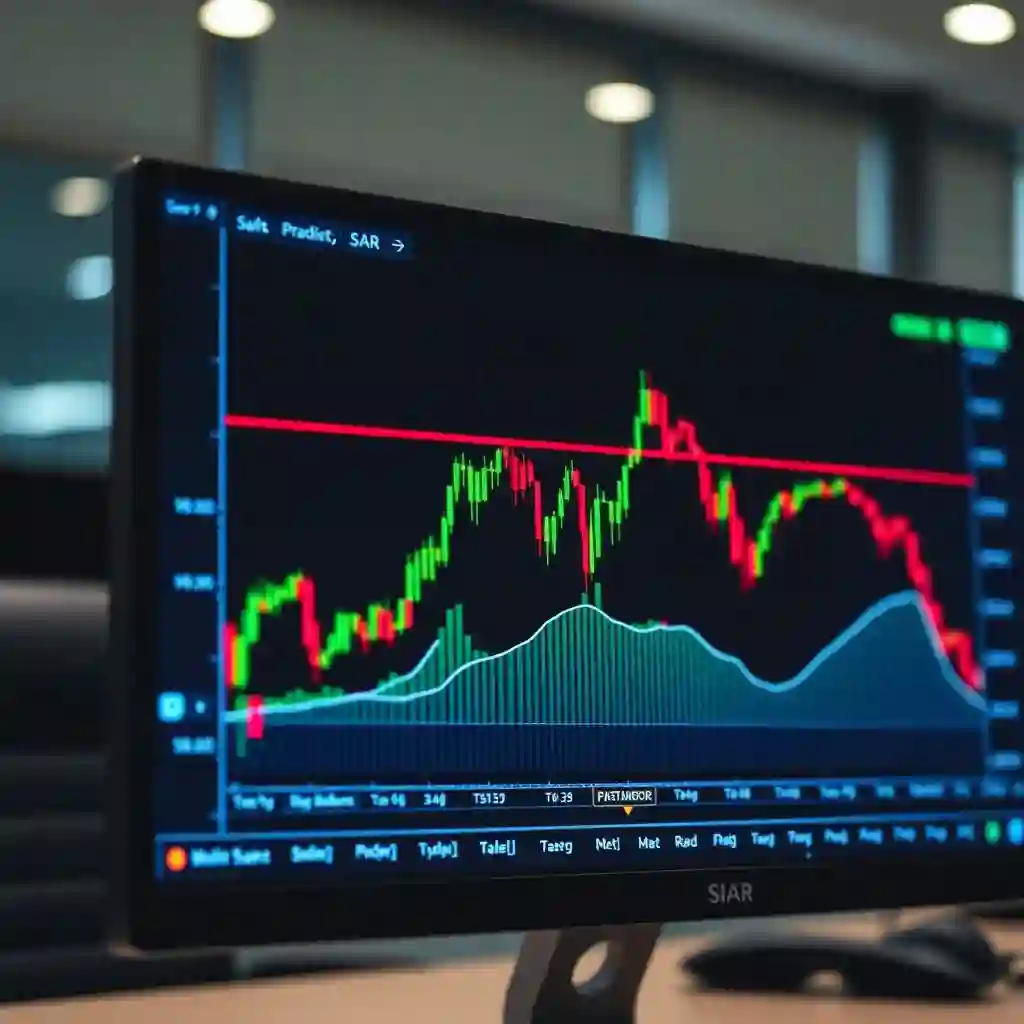
Parabolic SAR for Trend Identification is a technical analysis tool used by traders to determine potential reversals in the price trend of financial instruments such as stocks, commodities, and currencies. This indicator, developed by J. Welles Wilder Jr., provides clear buy and sell signals with minimal subjectivity, making it an invaluable asset for any trader looking to capitalize on short-term trends.
Understanding Parabolic SAR
The Parabolic SAR (Stop and Reverse) is a simple yet powerful technical indicator that helps traders identify potential trend reversals. It consists of a series of dots plotted below or above the price chart, depending on whether the market is in an uptrend or downtrend.
How Parabolic SAR Works
The dots, also known as “SAR points,” are calculated based on time and price parameters. They move closer to the price during a trend but accelerate away when a reversal is suspected. This acceleration occurs due to an increase in the value of the extreme point (EP) that marks the highest high or lowest low.
Setting Up Parabolic SAR
To set up the indicator, traders need to input two parameters: the Initial Step and the Maximum Step. The Initial Step is the initial acceleration factor, usually set at 0.02, while the Maximum Step determines how fast the dots can accelerate.
Identifying Trends with Parabolic SAR
Parabolic SAR for Trend Identification helps traders identify trends by observing the position of the dots relative to the price action. When dots are below the price, it indicates an uptrend, whereas dots above the price suggest a downtrend.
Buy and Sell Signals
A buy signal is generated when the SAR moves from below the price to above it, indicating a potential trend reversal. Conversely, a sell signal occurs when the SAR shifts from above the price to below it.
Real-world Example
Consider a scenario where a stock has been in an uptrend for several weeks but suddenly reverses direction. The Parabolic SAR dots will move above the price, signaling traders to take profit or consider selling positions.
Combining Parabolic SAR with Other Indicators
While Parabolic SAR is a powerful tool on its own, combining it with other indicators can provide more robust trend identification. For instance, integrating the RSI (Relative Strength Index) helps confirm the strength of trends.
RSI Integration
Using the RSI alongside Parabolic SAR allows traders to gauge overbought and oversold conditions. When combined with trend signals from Parabolic SAR, this provides a comprehensive view of market momentum.
Limitations of Parabolic SAR for Trend Identification
No technical indicator is without flaws, and the Parabolic SAR has its limitations too. It tends to produce false signals during choppy markets or when volatility spikes.
Choppy Markets
In range-bound markets with low volatility, the dots may frequently change sides, leading to numerous buy and sell signals that do not align with actual trend reversals. This can result in losses for traders who act on these signals.
Advanced Strategies Using Parabolic SAR
For more experienced traders, combining Parabolic SAR with other technical analysis tools opens up opportunities to refine trading strategies and improve risk management.
Risk Management Techniques
One advanced strategy involves using the Parabolic SAR for stop-loss placement. By setting stops at or near the SAR point, traders can protect themselves from significant losses in case of trend reversals.
Parabolic SAR vs. Other Trend Indicators
The Parabolic SAR is often compared to other popular trend-following indicators such as moving averages and Bollinger Bands. Each tool has its unique characteristics and applications, making it essential for traders to understand the nuances.
Moving Averages
While moving averages smooth out price data to identify trends, they lag behind actual market movements compared to the more responsive Parabolic SAR. This makes the latter particularly useful in rapidly changing markets.
Conclusion
The Parabolic SAR for Trend Identification offers a straightforward yet effective approach to identifying and trading with price trends. By understanding how it works, traders can enhance their decision-making process and potentially improve their profitability.